



Game info
Physics puzzle, Logic
Explore Cut the Rope physics puzzles, rope-cutting order, swing timing, stars and useful ways to deliver candy safely to Om Nom.
Cut the Rope: Feed Om Nom with a Better Plan
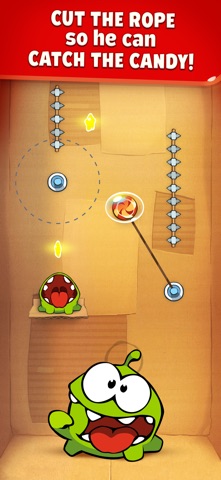
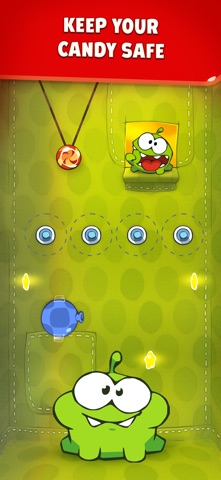
Cut the Rope is ZeptoLab's physics-puzzle game about delivering candy to a hungry green monster named Om Nom. Swipe through ropes, use the objects in the scene and collect stars while preserving a safe final approach to his mouth. The basic action is simple, but a successful solution depends on both the order of your cuts and the moment you make them.
The official original-game page introduces the candy, stars and familiar character at the heart of the game. Before the first swipe, inspect the arrangement. A rope that looks like an obstacle may be the support that makes the next swing possible. Your first task is not to cut everything quickly. It is to identify what must keep holding the candy until a star is collected, a hazard is cleared or the right release position becomes available.
Gameplay Overview
Each puzzle is a small moving system. Gravity pulls the candy down, ropes constrain its movement and objects can change what happens after a release. The destination is Om Nom's mouth, while stars encourage you to plan a more demanding path on the way there.
Start by locating the candy, the remaining supports and the final approach to Om Nom. Then look for a hazard or object that interrupts the direct route. A useful plan explains how the candy reaches that obstacle and how it leaves safely afterwards. If you cannot yet describe the whole path, identify the first movement that will reveal more. Watching one controlled swing is often more informative than cutting several ropes at once and losing track of what caused the result.

How to Play: Inspect the Whole Route
Before making the first cut, trace a possible route with your eyes. Work from the candy towards the destination, then check the same route backwards from Om Nom. Notice which stars sit naturally along it and which require an extra loop, lift or change of direction.
For example, a candy hanging between two supports may need one rope removed so it can swing across a star, followed by a later release towards the mouth. Cutting both supports immediately removes that opportunity. The puzzle is asking you to preserve a useful connection until it has done its job. This makes the opening inspection practical: identify what each rope is still needed for, not simply which rope seems easiest to reach with a pointer.
Controls: Make a Deliberate Cut
Swipe across the rope you intend to cut. Begin and end the gesture so that it crosses the chosen support clearly, particularly when several ropes sit close together. Tap interactive objects such as bubbles according to the puzzle's prompt; cutting a rope and activating a gadget are different actions with different consequences.
Keep input separate from observation. Make a cut and watch the movement it produces before starting the next gesture. A rope still attached may be providing the pivot needed for the candy to swing towards a star. An accidental second cut can remove that pivot and turn a controlled arc into an early fall. On a small display, pay close attention to nearby supports and the path of your swipe. A reliable action matters more than a fast one because the rest of the solution depends on knowing exactly which constraints remain.
Pro Tips: Separate Order from Timing
Cut order and cut timing are different problems. Order decides which supports or objects remain available; timing decides where the moving candy will travel when an action happens. Solve them separately when possible. First work out a plausible sequence, then improve the release cue within that sequence.
Suppose the candy must swing right before it can fall into Om Nom's mouth. A failed attempt could mean that the wrong support was removed, or that the correct final cut happened while the candy was travelling left. Those failures can look similar at the end but need different corrections. Ask whether the route itself was possible before changing the timing. Once the route works, use a clear visual landmark to make the final action more repeatable.
Key Features
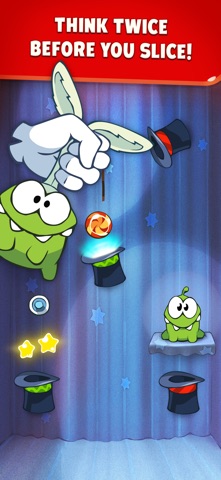
The core Cut the Rope features are candy delivery, rope physics and optional star collection. Across the franchise, objects such as bubbles and air cushions add new ways to shape the route. ZeptoLab's official franchise overview describes how these interactions build on the same basic sequence of observing, cutting and feeding Om Nom.
The strength of the design is that a small change can create a very different result. Removing one support changes the pivot; using an object at a different point changes the approach; waiting longer changes the release direction. Learn one interaction at a time. When a new object appears, give it a clear job in the route rather than activating it immediately because it is available.
Read the Direction of the Swing
A swinging candy has a position and a direction of travel. Both matter. The same place on the screen can be reached while moving left or while moving right, producing different paths after a rope is cut. Look at the motion leading into the release instead of relying on a still-image memory of where the sweet should be.
Try a simple timing experiment: repeat the same opening, then cut on opposite passes through a visible landmark. Compare which side the candy travels towards afterwards. You do not need a perfect physics calculation to learn from this. The important observation is whether the release preserves the movement that helps the next step. Once you recognise that relationship, a difficult-looking swing becomes a choice between identifiable release windows.
Plan Stars without Losing the Delivery
Stars are an additional route-planning challenge, not a reason to forget the delivery. If a complicated attempt repeatedly collects a star but misses Om Nom, first find a route that feeds the monster. Then ask which part of that successful path can be extended to pass through the missing star.
This separates two questions that otherwise become tangled: whether the candy can reach the mouth, and whether it can visit every desired position first. Imagine a star sitting beyond the direct fall. You may need a wider swing before releasing, rather than a completely different opening. Keep the working steps intact while you test that extension. A star attempt becomes easier to diagnose when you know exactly where it departs from a route that already completes the level.
Learn Gadgets One at a Time
When a gadget appears, test what action it changes: direction, height, speed or support. A bubble and an air cushion should not be treated as interchangeable decoration. In the series' puzzle vocabulary, each object creates a different opportunity for moving the candy through the scene.
Set up the next step before activating that opportunity. If an object can move the candy into a new area, identify what will catch, stop or release it there. Otherwise a successful first action may simply send the sweet into the next hazard. Watch the interaction in isolation on an early attempt, then connect it to the full route. This is a practical way to learn a new mechanism without turning every retry into a sequence of guesses.
Think Backwards from Om Nom
Begin at Om Nom and ask what the candy's final approach must look like. Does it need to fall almost vertically, arrive from one side, or reach a particular opening? Once that final segment is clear, locate the last support or object capable of producing it.
Then work backwards one more step: how can the candy reach that support with the right direction of travel? This method reduces the temptation to use every object in the order it appears from left to right. A gadget near the start of the scene may matter only because it sets up the final release. Working backwards gives each earlier action a purpose, and it helps you recognise when an attractive star route would leave the sweet in the wrong position for the finish.
Use Retries as Experiments
Make a retry answer a specific question. You might compare an earlier final cut with a later one, or test whether keeping one support longer creates a useful swing. Keep the other actions as similar as possible so the result tells you something about that change.
If you alter the cut order, timing and gadget use all at once, a successful attempt is difficult to repeat and a failed one explains little. A small experiment creates a clearer result: the candy now reaches the star but passes below the mouth, or it clears the hazard but arrives on the wrong side. Each observation narrows the next adjustment. Cut the Rope rewards this kind of patient curiosity because the moving scene itself shows how your action affected the route.
Keep Successful Steps Intact
Once the opening reliably reaches a useful position, stop rewriting it after every later miss. Treat it as a checkpoint in your own plan. Repeat those early actions, then put your attention on the first part that still fails.
For instance, if the candy consistently enters a bubble but misses the next star after release, the bubble entry is already doing its job. Changing the first cut may only remove that reliable setup. Concentrate on when and where the release happens. This way of preserving progress is especially useful in a puzzle with several linked interactions. You build a repeatable sequence piece by piece instead of repeatedly rediscovering an opening that was already good enough.
Advanced Tips: Diagnose the Miss
Describe a miss using the route, not just the result. The candy might have fallen short, passed beyond the mouth, hit a hazard, or reached the right area while moving the wrong way. Each description suggests a different cause.
A shortfall can point to an early release or an insufficient swing. Overshooting may require a different release window or another support left in place longer. A collision can mean the route itself is wrong, even if its timing is precise. Test the explanation rather than automatically cutting faster on the next attempt. The aim is not to force the sweet through the same failed path; it is to understand which part of the path must change to make the delivery possible.
A Simple Way to Remember a Difficult Puzzle
For a puzzle you want to revisit, remember the sequence using visible events. A note such as release after crossing the upper star is more useful than an arbitrary number of seconds, because the movement may start at a slightly different moment when you replay.
Keep the note short: first support, useful landmark, object activation, final release. Include travel direction when it matters. If you save a screenshot, use it to remember the layout rather than expecting a still image to capture the timing. The official Cut the Rope app listing provides official installation and product information. When revisiting a puzzle, compare the arrangement, gadgets and starting movement with your note before repeating its sequence.
Similar Games in the Cut the Rope Family
Cut the Rope 2, Magic, Time Travel and the other official franchise releases explore the same candy-and-Om-Nom idea through their own puzzles and mechanics. Each develops the familiar rope-and-candy foundation through its own puzzles and mechanics.
For another free browser puzzle, use the related rope and feeding games. Cat Cut, Feed the Panda and the other physics alternatives offer different objects, movement and destinations. Compare the rule that changes the route: cutting a support, using momentum, bouncing or feeding a character. Choosing by that interaction is more useful than choosing only by the character's appearance. A new puzzle can feel familiar while still requiring its own solution rather than a copied Cut the Rope sequence.
Browser games in this collection
- Cat Cut — A physics puzzle about delivering a fish to a hungry cat. Rope cuts and other object interactions change the fish route.
- Feed the Panda — A static physics feeding puzzle with a panda theme. Its catalogue explicitly compares the rope-cutting mechanics with Cut the Rope.
- Cut For Cat — Cut For Cat asks you to deliver candy to a hungry cat by changing a physical arrangement. Its description includes cuttable ropes, uncuttable chains, bubbles and obstacles.
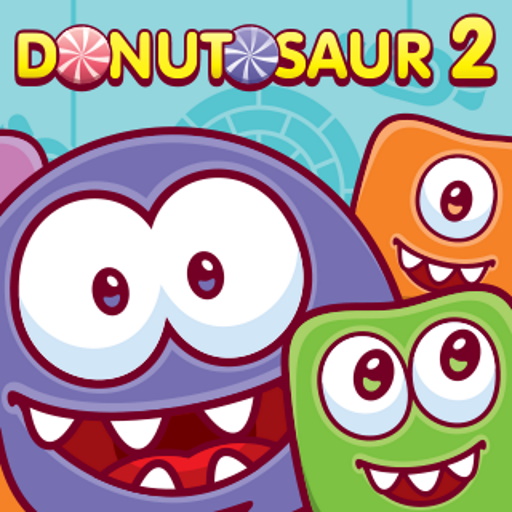
- Donutosaur 2 — Donutosaur 2 is a creature-feeding physics puzzle rather than a rope-cutting clone. You can change Donutosaur's shape, switch gravity and use helpful creatures that push, pull or remove objects.
- Rope Master — Rope Master suspends a ball above cups and asks you to release it so the cups break. Cutting, swinging and choosing the moment of release are central.
- Rope Slash Online — Rope Slash Online uses rope cuts to send a ball into cans. Its source describes moving platforms, obstacles and changing the ball's direction through successive cuts.
Observe the First Useful Motion
The first useful movement is the one that clarifies the puzzle. It might be a swing that shows whether the candy can reach a star, or a release that reveals the final approach to Om Nom. You do not need to spend the opening attempt chasing a perfect score before understanding that movement.
Watch which constraint changes after your action. If one rope becomes the remaining pivot, follow the arc it permits. If the sweet reaches a new object, identify whether it now has a different direction or height. These observations create a route you can explain. They also make the next attempt more enjoyable: instead of repeating a mysterious miss, you return with a concrete question about what a particular cut or interaction can accomplish.
History and Updates
ZeptoLab created Cut the Rope and maintains the franchise's official product information. Use the ZeptoLab website and its linked support routes for release and installation questions. The original game's candy delivery, rope constraints and optional star routes provide the foundation for the wider Om Nom series.
When watching a video, compare the starting arrangement and available gadgets before copying an action sequence. The useful lesson is the physical purpose of a step: preserving a pivot, gaining height in a bubble or releasing momentum towards the final landing. That reasoning is easier to reuse than a remembered swipe made at an unexplained moment. Keep puzzle notes tied to visible landmarks and travel direction so that returning to a difficult level becomes a matter of reconstructing the route rather than guessing at an old timing.
One Better Cut Is a Good Next Goal
Begin a Cut the Rope level, inspect the supports and decide what the first cut should preserve. Watch the candy move, then use that movement to choose the next action. The most satisfying solution is one you can explain as a connected route rather than a lucky set of swipes.
For your next attempt, make one improvement: keep a useful support longer, release on the correct pass, or extend a successful delivery to collect an extra star. A small timing discovery can solve a puzzle that looked impossible a minute earlier. Feed Om Nom, enjoy the result and carry that understanding into the next scene, where the same simple controls will ask a slightly different physics question.
Frequently asked questions
What is Cut the Rope?
Cut the Rope is ZeptoLab’s physics puzzle about getting candy into Om Nom’s mouth. Cut ropes, use gadgets and plan a route that can collect stars without losing the final delivery.
What is the goal in Cut the Rope?
Get the candy into Om Nom’s mouth. Stars add a route-planning challenge, but the candy still needs a safe final approach.
How do I cut a rope in Cut the Rope?
Swipe clearly across the intended rope. Watch which supports remain afterwards, because an uncut rope can be the pivot needed for the next swing.
Why does the order of rope cuts matter?
Each cut changes which supports remain and how the candy can move. Removing a support too early can prevent a useful swing or make a later release impossible.
How do I improve Cut the Rope timing?
Watch both the candy’s position and direction of travel. Use a visible landmark as a release cue, and change one timing decision at a time when retrying.
Should I collect every star before finishing a level?
Finding reliable candy delivery first can make a puzzle easier to understand. Then extend that working route to collect stars without losing the final approach.
How do bubbles change a Cut the Rope solution?
A bubble changes how the candy moves through the scene. Plan when it needs to carry the candy upward and where popping it will begin the next fall or approach.
How should I use a Cut the Rope walkthrough?
Compare the starting arrangement, gadgets and candy movement. Learn why each cut preserves a support or releases momentum, rather than copying timing without its purpose.

Good game? Tell us.0
Share a tip, celebrate a high score, or tell us what you think. Keep it friendly.